_PNG.png)
_PNG.png)


The Best Way to Restore a Deck

Restoring a deck isn’t just about blasting it with water and hoping for the best—it’s about using the right process, the right chemistry, and knowing what your wood actually needs. Done properly, a restoration can bring an aging deck back to life and extend its lifespan for years. Done incorrectly, it can leave you with damaged wood, uneven colouring, and a lot of frustration.
The Best Way to Restore a Deck
For most untreated or previously maintained (but not painted) decks, the best method is a combination of pressure washing and proper chemical application.
Step 1: Apply the Right Cleaning Solution
Before any pressure washing begins, applying the correct cleaning agents is key. This is where many DIY jobs go wrong.
Sodium Metasilicate: This is a strong, effective cleaner that helps break down dirt, grime, mildew, and old organic buildup embedded in the wood.
Peroxide-based cleaners: These help lift stains and brighten the wood while being safer on surrounding vegetation compared to harsher alternatives.
Using these chemicals allows you to clean deeper without relying on excessive pressure, which is critical for preserving the integrity of the wood.
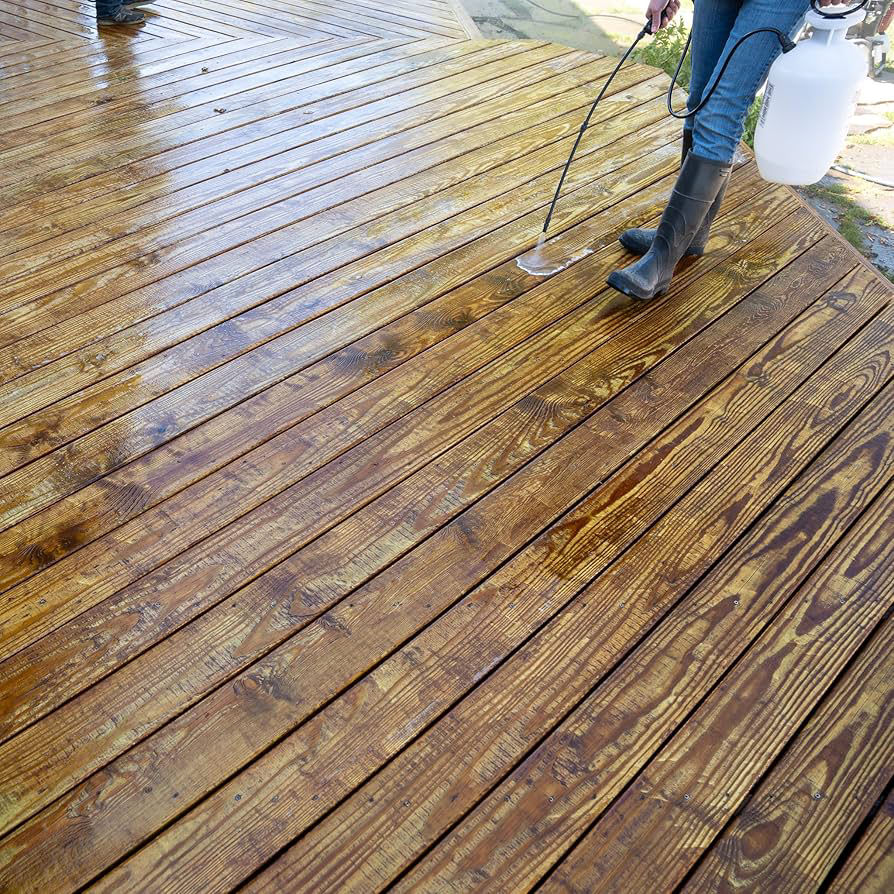
Step 2: Controlled Pressure Washing
Once the chemicals have done their job, a controlled pressure wash rinses everything away. The goal here is not to “strip” the wood with force, but to gently rinse and restore the surface.
Pros of this method:
Removes years of dirt, algae, and weathering
Restores natural wood grain and colour
Prepares the surface for sealing or staining
Reduces the need for aggressive sanding

The key is using the right pressure and technique—too much pressure can scar the wood, leaving permanent marks.
Step 3: Neutralize and Brighten
After cleaning, the wood’s pH is often left in an alkaline state. This is where a wood brightener comes in.
Oxalic Acid (Wood Brightener): This step neutralizes the cleaning agents and brings the wood back to a more natural, even tone. It also helps remove tannin stains and enhances the overall appearance.

Skipping this step is a common mistake and
often results in dull or uneven-looking wood.
When It Might Be Worth Hiring a Professional
There’s more to deck restoration than just renting a pressure washer. Understanding:
Proper chemical ratios
Dwell times
Wood types and conditions
Correct pressure techniques
…can make a big difference in the final result.
In many cases, hiring someone with experience can actually save money long-term by avoiding damage and ensuring the job is done right the first time.
What If My Deck Has Been Previously Stained or Painted?
This is where things change—and where a lot of homeowners get tripped up.
If your deck has been previously stained or painted, you’ve essentially missed the opportunity to restore it using standard pressure washing methods.
Here’s why:

Paint and some stains penetrate deep into the wood fibers
Pressure washing may remove surface material, but it won’t remove everything evenly
You’ll likely end up with a patchy, inconsistent finish

The Reality
Pressure washing is not the proper method for removing old paint or solid stain.
The Best Option
The correct approach is:
Sanding the deck down to bare wood
Starting fresh with a new finish
This ensures a smooth, even surface that will properly accept new stain or sealer.
Who Should Handle This?
At this stage, it’s usually best to bring in:
An exterior painter
A handyman or refinishing specialist
Sanding a full deck is labour-intensive and requires the right equipment and technique to avoid gouging or uneven surfaces.
Final Thoughts
The best way to restore your deck depends entirely on its current condition:
Bare or previously maintained wood?
→ Chemical treatment + soft pressure washing + brightening is your best bet.
Painted or heavily stained wood?
→ Sanding and refinishing is the proper route.
Either way, taking the time to do it properly—or hiring someone who knows how—will give you a result that not only looks great but lasts.
A well-restored deck doesn’t just improve curb appeal—it becomes a space you actually want to spend time on again.


Comments